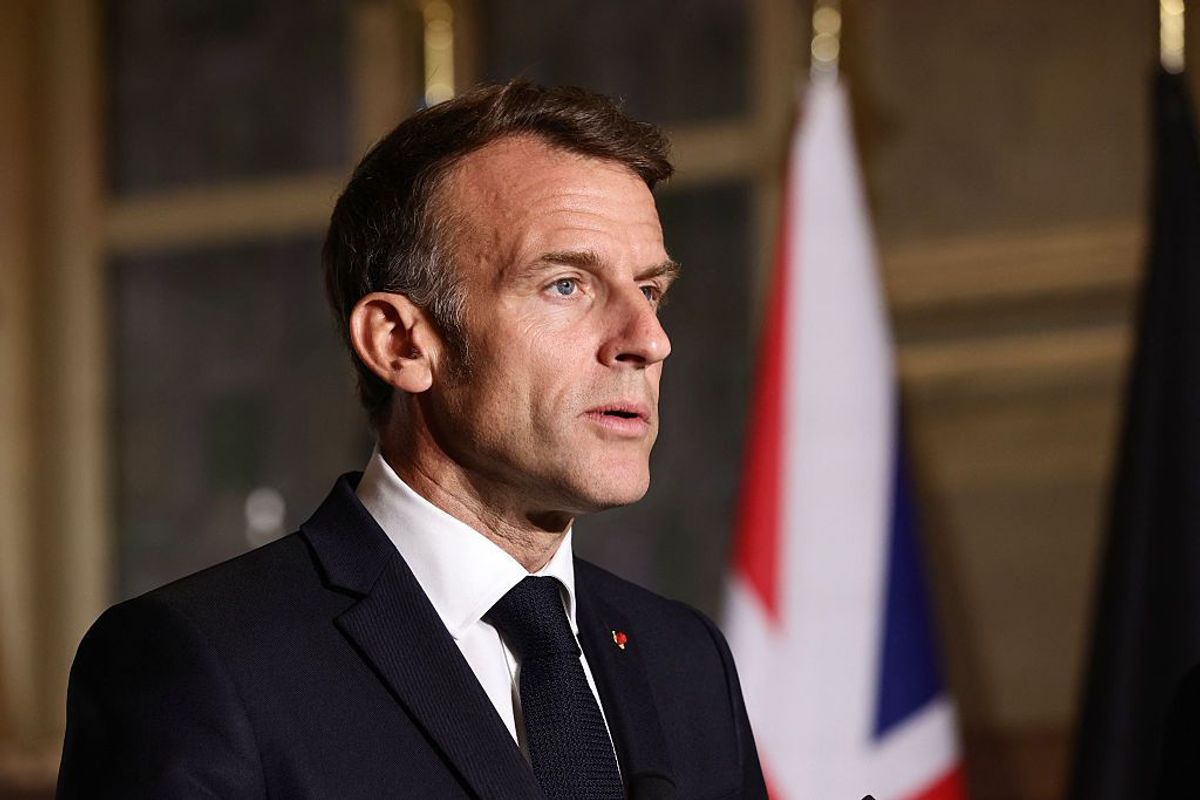
French President Emmanuel Macron stated that international intelligence agencies have detected several indicators suggesting Russia is preparing for a new wave of troop mobilization following recent elections. Speaking in a recent interview, Macron noted that reports from European, American, and Ukrainian intelligence services point to a plausible scenario involving the conscription of approximately 300,000 additional personnel.
Intelligence and Strategic Context
The warnings follow earlier assessments from Ukraine's Presidential Office, which cautioned that Moscow could seek to call up as many as 600,000 individuals across 2026 and 2027 to sustain its military operations. This potential escalation comes as voluntary enlistment numbers face mounting pressure and public fatigue over the prolonged conflict grows.
While Russia has avoided another overt, large-scale public conscription drive since the autumn of 2022—opting instead to rely on elevated financial incentives and contract recruitment managed by regional authorities—analysts suggest the Kremlin may now need a formal or semi-structured call-up to meet its strategic objectives. According to leadership assessments, these additional forces could be deployed to reinforce ongoing offensives in Donetsk Oblast or to open secondary fronts.
The Human Cost and Domestic Calculus
Observers note that the prospect of mass mobilization underscores a calculated willingness within the Kremlin to absorb severe demographic and economic costs. By drawing on extensive reserves, Moscow aims to maintain intense pressure on Ukrainian defensive lines despite substantial attrition.
The signal Russia is sending today is that we are prepared to make even greater sacrifices in order to seize the entire Donbas.
At the same time, maintaining a steady influx of personnel serves a dual purpose for domestic control. Conscripting individuals from various regions, particularly outside major metropolitan centers, helps manage domestic dissent by diverting discontented or marginalized populations away from population hubs where political opposition might otherwise crystallize.
Economic Pressures and Long-Term Outlook
Economists and geopolitical analysts argue that the sustained focus on military expansion locks the country into a precarious trajectory. Pushing forward with extensive force generation deepens an already severe labor shortage and saddles the broader economy with long-term structural damage. Yet, within the current political framework, the leadership appears committed to sustaining the campaign, treating high casualty rates and economic strain as acceptable expenses in pursuit of territorial control.

