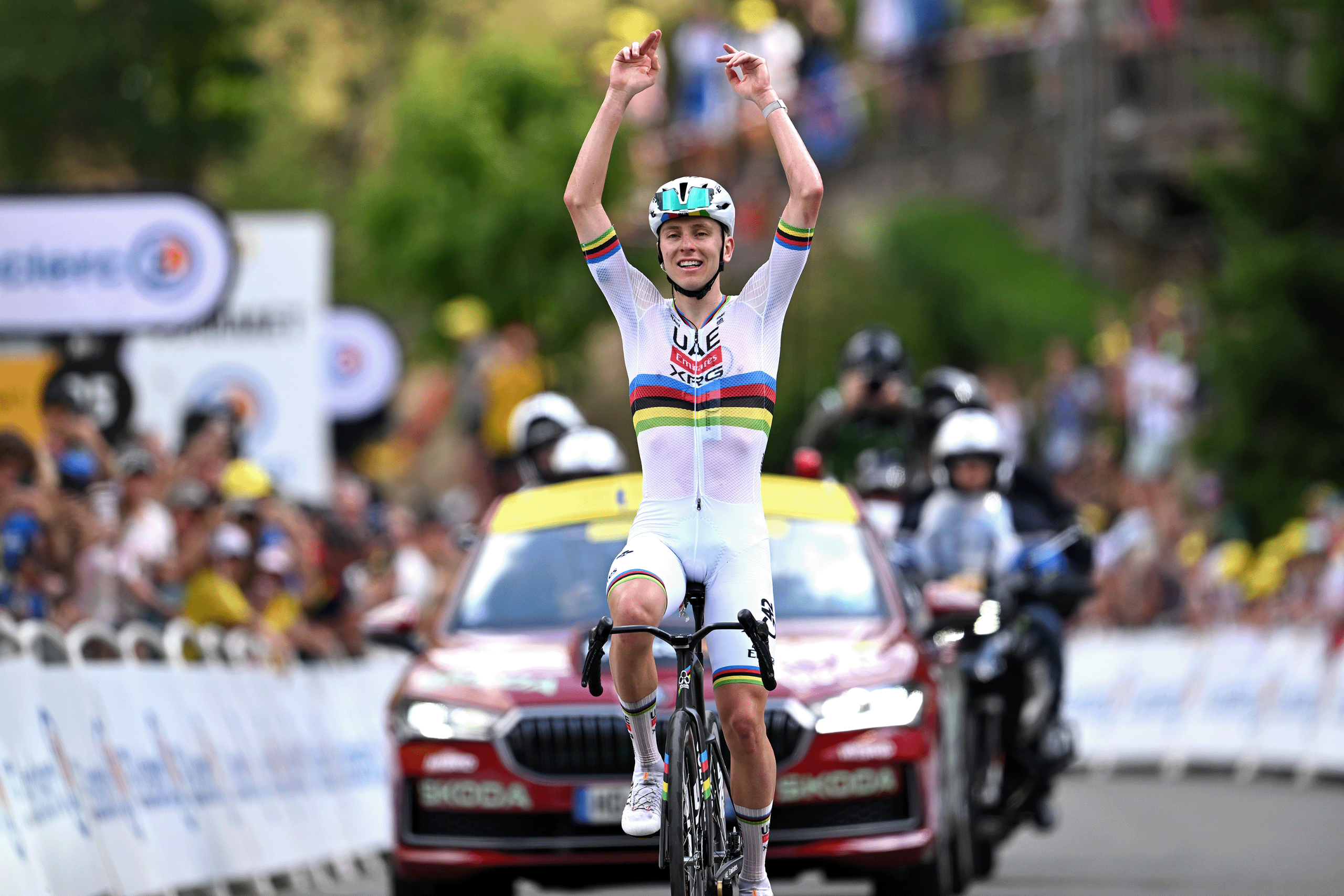
The Fragility of Greatness: Looking at Pogačar's Long Road Back
There is a strange, unsettling silence that falls over the cycling world when a generational talent suddenly vanishes from the road. For weeks following his brutal crash at the Vuelta a España—where a fractured collarbone and neck abruptly derailed his season—Tadej Pogačar retreated entirely from the public eye. But during a recent video appearance at the presentation of the 2031 UCI World Championships in Trentino, he finally broke that silence with a brief, reassuring update: "I'm getting better each day."
In my opinion, hearing those five words is both a relief and a stark reminder of the underlying volatility that defines modern sports. We tend to view champions like Pogačar as invincible machines, athletic anomalies built to conquer mountains without consequence. Yet, a single stretch of tarmac can shatter that illusion in a split second, reducing a dominant force to someone fighting simply to regain basic physical comfort.
The Psychological Toll of Sudden Absence
What makes this particular episode so fascinating isn't just the physical trauma of broken bones; it is the psychological weight of forced inactivity for an athlete whose entire identity is tied to relentless forward momentum. From my perspective, elite competitors struggle less with the pain of an injury and more with the suffocating vacuum of being sidelined.
- The Loss of Control: When you are used to dictating the pace of a race, letting your body heal on its own schedule feels like a form of captivity.
- The Mental Reset: A major crash forces a sudden confrontation with mortality, reshaping how a rider approaches risk.
- The Public Scrutiny: Every silence from a champion's camp triggers wild speculation, making recovery a public spectator sport.
What many people don't realize is that recovering from a serious trauma like a neck and collarbone fracture is as much about mental rewiring as it is about bone calcification. When you have tasted the absolute peak of cycling history, returning to the peloton means voluntarily stepping back into the exact arena that nearly broke you. If you take a step back and think about it, the courage required to pin a number on your back again is often greater than the physical effort of winning the race itself.
Redefining Longevity in a Brutal Sport
Looking ahead toward future championships and the long-term arc of his career, this setback prompts a deeper question about how modern cycling treats its most prized assets. We demand endless spectacles, three-week Grand Tours packed with chaotic sprints, and relentless media availability, all while expecting athletes to bounce back from catastrophic impacts like rubber bands.
Personally, I think the way Pogačar handles this chapter will dictate the final legacy he leaves behind. True greatness isn't measured solely by how many monuments or Grand Tours sit in a trophy room; it is defined by the resilience required to rebuild when the foundation crumbles. A detail that I find especially interesting is how injuries often force aggressive racers to mature tactically, trading reckless youthful exuberance for calculated, veteran wisdom.
What this really suggests is that Pogačar's crash might ultimately prolong his career rather than shorten it. Forced rest gives an overworked body a rare chance to reset, and a mature perspective can turn a brilliant racer into an untouchable tactician. While the road back to peak form is long and paved with uncertainty, the grit required to navigate it is precisely what separates ordinary winners from true icons.