US Army Pacific Prepares for Potential Conflict
The US Army Pacific (USARPAC) is deploying forces and equipment across the Pacific region, anticipating a potential Chinese invasion of Taiwan as early as 2027. This strategic move is based on the assumption that Beijing could possess the military capability and intent to act within the next year.
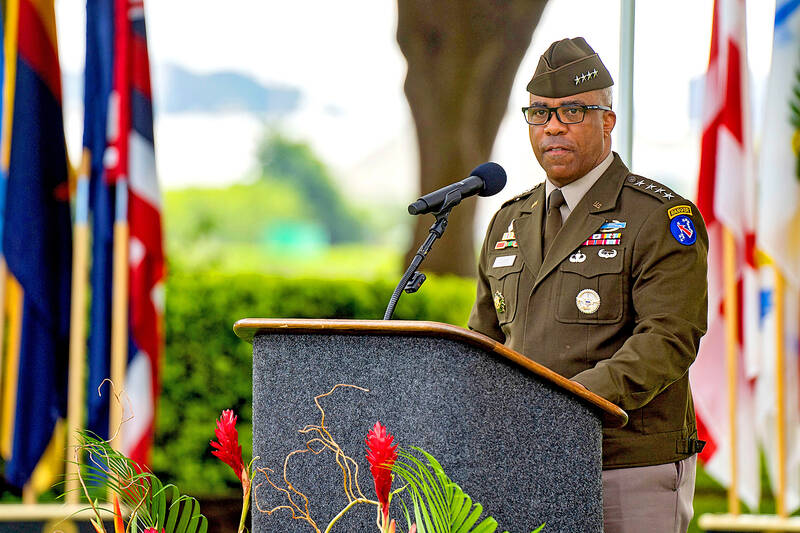
Speaking at the TechNet Indo-Pacific conference in Honolulu, US General Ronald Clark emphasized the validity of the 'Davidson window,' a term coined by Admiral Philip Davidson, former head of the US Indo-Pacific Command. In 2021, Davidson warned that the threat of Chinese military action against Taiwan could materialize within six years, a timeframe that has significantly influenced US defense budgeting and strategy in the Pacific.
General Clark confirmed that USARPAC is taking this threat seriously, stating, "The answer for us at USARPAC is yes." The six-year window is a critical period for the US military to be ready, and they have adopted the Army Ready Forward initiative to achieve this goal.
Army Ready Forward Initiative
Under the Army Ready Forward initiative, USARPAC has placed equipment, materiel, and personnel on a rotational basis west of the International Date Line on the island chains closest to China. This strategic approach aims to deter or obstruct a potential Chinese invasion.
The initiative also highlights the challenge of balancing "exquisite high-end systems and affordable, mass-producible alternatives," particularly in the realm of autonomous systems.
2027 Timeline and Varying Assessments
The 2027 timeline has been a focal point for US defense planning, but assessments of Beijing's immediate intent vary. In 2023, former CIA director William Burns indicated that Chinese President Xi Jinping had instructed the Chinese People's Liberation Army (PLA) to be ready by 2027 for a successful invasion.
However, an annual threat assessment by the US Office of the Director of National Intelligence contradicted this view, stating that Chinese leaders do not currently plan to invade Taiwan in 2027. They do not have a fixed timeline for achieving unification and will consider various factors, including PLA readiness, Taiwan's actions and politics, and the potential for US military intervention.
Implications and Reactions
The potential conflict between China and Taiwan has sparked various reactions and discussions:
"The US military has placed equipment, materiel and personnel on the islands near China..."
"The US Army Pacific (USARPAC) is deploying forces and equipment across the region..."
Some commenters expressed skepticism about the US's ability to counter China effectively:
"China acting soon would be entirely because they see such a drop in USA power projection."
"China's oil use is largely only on transportation. Their biggest energy source is coal, but it's quickly being overtaken by solar, their multiple (and in construction) mega-dams, wind, and nuclear."
Others highlighted the potential global impact of a conflict:
"If China invades Taiwan, the entire world loses."
"A conflict over Taiwan would quickly encompass a global war."
The US's recent actions in Iran and Venezuela have also been linked to restricting China's access to cheap fuel, potentially impacting its ability to act.
Preparing for All Scenarios
Professional militaries worldwide are tasked with preparing for all potential conflicts, regardless of their likelihood. This preparation maintains balance and deterrence, as demonstrated by China's military buildups to appear capable of invading Taiwan.
The US military's job is to maintain a credible ability to fight all potential enemies, with China currently being the most powerful potential adversary. Countering Chinese buildups is essential to prevent war, even if the US does not expect it.
In summary, the US Army Pacific is taking proactive measures to address the potential threat of a Chinese invasion of Taiwan by 2027. This involves strategic deployments, equipment placement, and a focus on maintaining a credible military capability in the region.

